
How to Price House Cleaning: A Simple Guide for Cleaning Businesses
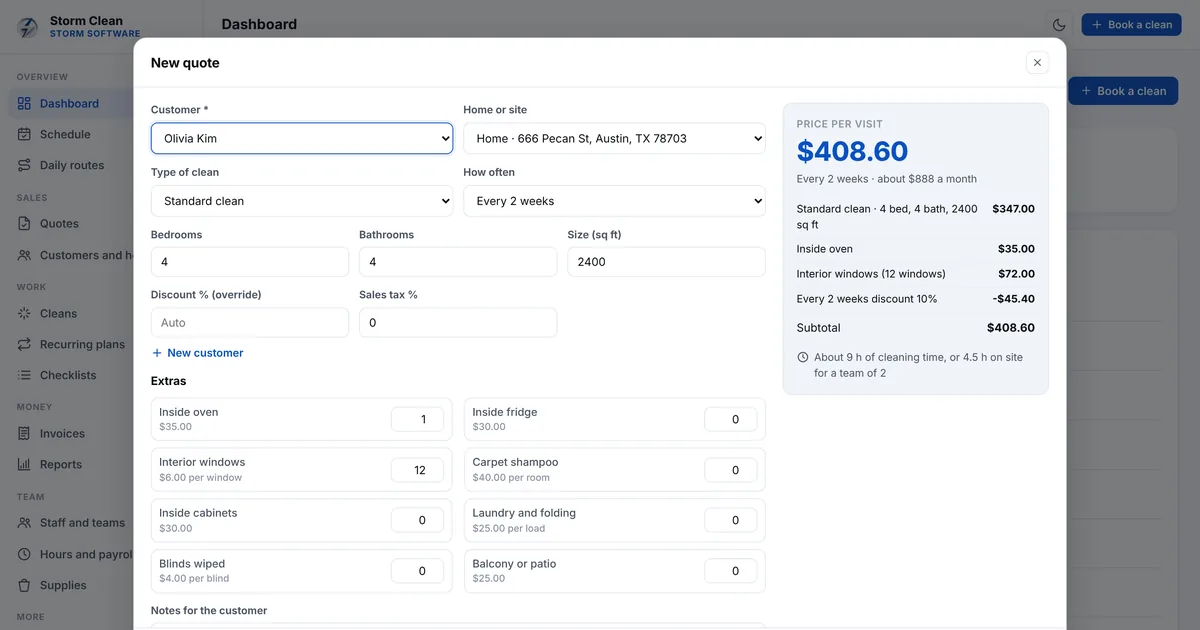
Pricing is the decision that makes or breaks a cleaning business. Quote too low and you are busy but broke; quote too high and the phone stops ringing. The good news is that a simple, repeatable pricing method beats guesswork every time. This guide covers the three common ways to price a clean, how to charge for deep and move-out work, how to set recurring discounts, and how to check that every quote actually pays.
Three ways to price a clean
Most cleaning businesses use one of three methods, or a mix of them. Each has a place, and knowing the trade-offs helps you pick the right one for the job in front of you.
- Per room: a base price plus a set amount per bedroom and bathroom. Easy to quote over the phone and easy for customers to understand.
- Per square foot or square metre: fair for very large or very small homes, and the standard for commercial cleaning.
- Hourly: simple and safe for you, but customers cannot tell what the final bill will be, so it can cost you bookings.
The blended method most cleaners settle on
A practical approach combines all three. Rooms set the starting price, because that is how customers describe their home. A small amount per extra 100 square feet covers the big houses that would otherwise eat your margin. Then you check the result against an hourly target, so you know the price is worth your time.
For example, a base of 90 plus 20 per bedroom and 25 per bathroom puts a three bedroom, two bathroom home at 200 before size. If it is 1,800 square feet, adding 4 for every 100 square feet over 1,000 brings it to 232.
Run your own numbers in our free cleaning quote calculator. It shows the price per clean, the monthly value and what you earn per cleaning hour.
Deep cleans and move-out cleans
A deep clean covers the build-up a regular clean skips: baseboards, inside cabinets, behind appliances, light fittings and grout. A move-in or move-out clean goes further, often including inside the oven and fridge in an empty home.
Because these jobs can take twice as long, many cleaners charge 1.5 to 2 times their standard price. It is also common to require a deep clean before a customer starts a recurring plan, so every regular visit starts from a clean baseline.
Extras are where the margin is
List your extras with a clear price each: inside the oven, inside the fridge, interior windows, inside cabinets, laundry, blinds and carpets. Customers like choosing exactly what they want, and extras are often quick jobs with a high hourly value.
Recurring discounts without giving money away
Recurring customers are the backbone of a steady cleaning business. A home cleaned every week or two stays cleaner, so each visit is faster, and you can plan your schedule weeks ahead.
A discount of around 10 to 15% for weekly cleans, 10% for every two weeks and about 5% for monthly is common. Keep the discount smaller than the time you save. If a regular home takes 30% less time, a 10% discount still leaves you better off.
The number that matters: earnings per cleaning hour
Divide the price by the total cleaning hours across your team. A 232 clean that takes 3.3 cleaning hours earns about 70 per hour before costs. Subtract what you pay your cleaners, then remember travel time, supplies, insurance, marketing and the admin you do in the evenings.
If your earnings per cleaning hour are close to what you pay your team, the quote is too low. Raise your base price or your per room rates rather than cutting corners on the clean.
- Track how long each type of home really takes, not how long you hoped
- Review your prices at least once a year
- Add a minimum charge so small jobs still cover travel
Other service businesses use the same idea; our guide to pricing photography sessions walks through it step by step.
Quoting and booking without the spreadsheet
Once your pricing works, the next step is making it consistent. Cleaning software that holds your rates, extras and discounts means every quote is priced the same way, and an accepted quote can book the recurring cleans straight onto your schedule.
Storm Clean does this offline on your own computer for a one-time price. It builds quotes from bedrooms, bathrooms, size and extras, books recurring plans, schedules your teams and tracks checklists, hours and invoices.
See how Storm Clean runs quotes, recurring cleans and team schedules for $149 once, with no monthly fees.
For getting paid on time, read our guide to invoicing software for small businesses.
The bottom line
Price by room, adjust for size, charge properly for deep cleans and extras, keep recurring discounts modest, and always check your earnings per cleaning hour. A clear pricing method makes quoting faster, keeps your margins healthy and gives customers prices they can trust.
Try our free cleaning quote calculator.
You may also like: Storm Electrical, Storm Books, Storm Rentals