
How to Make a Home Inventory for Insurance: A Room by Room Guide
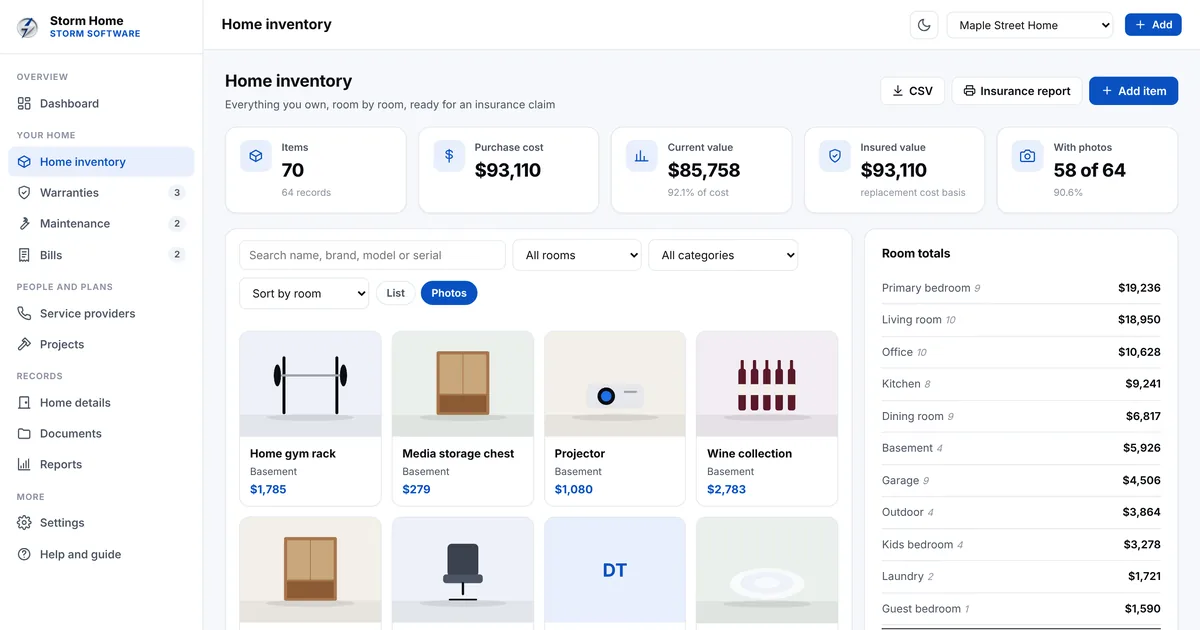
A home inventory is a list of everything you own, with photos, values and proof of purchase. Nobody enjoys making one, but after a fire, flood or burglary it is the difference between a quick claim and weeks of trying to remember what was in every cupboard. This guide shows a simple room by room method, what to record for each item, how to handle photos and receipts, and how to keep the whole thing safe and current.
Why a home inventory matters
After a loss, your insurer will ask you to list what was damaged or taken and to show what it was worth. Doing that from memory, while dealing with the stress of the event, is hard. People forget whole categories of things, from tools in the garage to clothes in a spare room, and anything left off the list is usually never claimed.
An inventory also helps before anything goes wrong. Adding up what you own shows whether your contents cover is high enough, and it makes moving, downsizing or settling an estate far easier.
Consumer groups such as United Policyholders and state insurance departments recommend making one before you need it.
Gather what you need
You do not need special equipment. A phone camera is enough for photos and video, and a single place to keep the list stops it from spreading across notes, folders and email.
- A phone or camera for photos and a short video walkthrough
- Receipts, order confirmations and manuals you already have
- Your current home insurance policy, so you know your limits
- A notebook, spreadsheet or home inventory app to hold the list
- An hour or two per few rooms, spread over a weekend
Work room by room
Pick one room and finish it before moving on. Start with the room that has the most valuable things, often the living room, kitchen or main bedroom, so the important items are covered first even if you stop halfway.
Go around the room in one direction. Open cupboards and drawers and photograph what is inside. Do not forget the places people miss: the garage, loft, shed, basement, storage boxes and anything kept outside.
- Living room: TV, speakers, furniture, rugs, art, books
- Kitchen: appliances, cookware, cutlery, small electricals
- Bedrooms: furniture, clothes, shoes, jewellery, bedding
- Office: computers, monitors, printers, phones, chairs
- Garage and garden: tools, bikes, mowers, outdoor furniture
What to record for each item
For everyday things, a photo and a rough value are enough. For anything worth more, add the details an insurer or the police would ask for.
Serial numbers matter most for electronics, tools and bikes, because they prove ownership and help police return stolen goods. Write down the make and model as well, since a replacement is usually priced from those.
- Name and description
- Room and category
- Brand, model and serial number
- Date bought and where
- Price paid and current value
- Photos, plus a photo of the receipt
- Warranty dates, if it is still covered
Photos and receipts
Take a wide photo of each wall of the room, then close ups of anything valuable. Photograph the label or back of electronics so the model and serial number are readable. A slow video walkthrough with a running commentary is a quick way to capture a lot at once.
For receipts, photograph paper copies before they fade and save order confirmations from online shops. If you have no receipt, a photo of the item, the box or a bank statement line still helps show it existed and roughly what it cost.
Values and depreciation
Your policy decides how items are valued. Replacement cost pays what it costs to buy the same thing new today. Actual cash value pays replacement cost minus wear and age, which is often much less for older electronics and furniture.
Record the price you paid and, for bigger items, a current value. Check your policy to see which basis applies, and talk to your insurer about extra cover for jewellery, art or collections, which often have low limits in a standard policy.
The California Department of Insurance home inventory guide is a good free checklist of what to list in each room.
Keep a copy somewhere safe
An inventory stored only in the house can be lost with the house. Keep at least one copy somewhere else.
Good options are a backup file on a USB drive kept at work or with a family member, a copy in a fire resistant safe, and an exported PDF sent to yourself. Whatever you choose, test that you can open it.
The Nevada Division of Insurance also suggests keeping copies away from home and updating them regularly.
Keep it up to date
The hardest part is not making the inventory but keeping it current. Add new items when you buy them, while the receipt is still in your hand. Set a reminder to review the list once or twice a year, and after any big purchase, renovation or move.
Upkeep has its own cost too. If you are setting money aside for repairs, a maintenance budget keeps the house itself in good shape between claims.
Work out a yearly figure with our free home maintenance budget calculator, which compares the 1% rule with the square foot rule.
Use an app that keeps it all together
A spreadsheet works for a few dozen items, but photos, receipts, serial numbers and warranties quickly become a mess of files and folders.
Storm Home keeps your inventory by room with photos and receipts attached, totals the value of each room, and prints an insurance inventory report with photos and serial numbers. Warranties, a maintenance schedule, bills and documents live in the same offline app, and your records stay on your own device.
See how Storm Home keeps your home inventory, warranties and maintenance in one place for $39 once, with no monthly fees.
The bottom line
Go room by room, photograph everything, record the details that prove ownership and value, and keep a copy away from home. Spend a weekend on it now and a few minutes each time you buy something, and you will be ready if you ever need to make a claim. A home inventory helps with records. It is not insurance advice, so check the details of your own policy with your insurer.
Try our free home maintenance budget calculator.
You may also like: Storm Wedding, Storm Focus, Storm Habits