
How to Plan a Vegetable Garden Layout: Beds, Spacing and Timing
A good vegetable garden starts on paper. Planning the layout before you plant means better spacing, fewer pests, less wasted seed and a harvest that is spread across the season instead of arriving all at once. This guide walks through bed size, spacing, companion planting, crop rotation and timing, in the order you would actually plan them.
Start with sun, water and size
Most vegetables want at least six hours of direct sun. Watch your space for a day and note where the sun falls. Put beds where they are easy to water and easy to reach; a garden you walk past every day gets more care than one at the back of the yard.
Start smaller than you think. Two or three well-tended beds produce more than six neglected ones.
Raised bed sizes that work
A common raised bed is 4 by 8 feet, or about 1.2 by 2.4 metres. The 4 foot width matters most: you can reach the middle from either side without stepping on the soil. Leave paths of at least 18 inches between beds so you can kneel and use a wheelbarrow.
Square foot spacing made simple
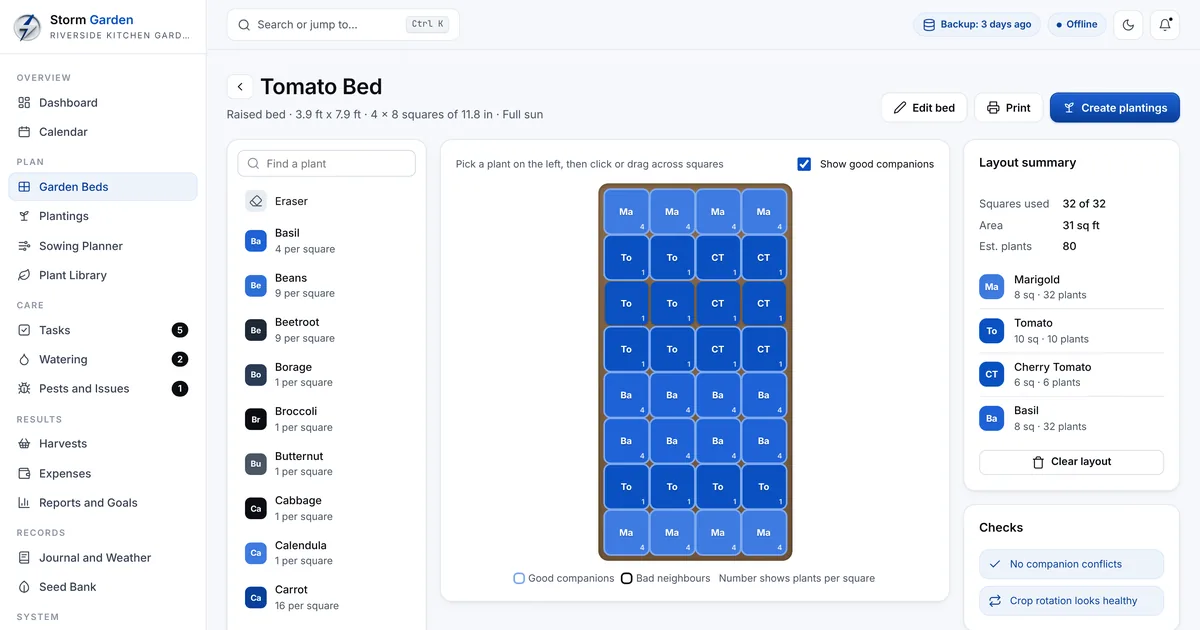
Square foot gardening divides each bed into a grid of one foot squares and plants a set number of each crop per square. It is an easy way to avoid overcrowding and to plan exactly how much to sow.
- 1 per square: tomatoes, peppers, broccoli, cabbage
- 4 per square: lettuce, chard, parsley, marigolds
- 9 per square: beets, spinach, bush beans
- 16 per square: carrots, radishes, onions
- Vining crops like cucumbers and squash need more room or a trellis
Companion planting: good and bad neighbors
Some plants grow well together and some do not. Basil and marigolds are classic companions for tomatoes. Carrots and onions are often paired. Beans generally should not sit next to onions and garlic, and fennel is best kept on its own. Companion planting is not a cure-all, but it is a useful tiebreaker when deciding what goes where.
Planning for a longer harvest
The biggest beginner mistake is planting everything on one weekend. You get a glut of lettuce in May and nothing in July. Instead, think of each bed as a sequence. Early cool-season crops like peas, spinach and radishes can be followed by warm-season crops like beans or zucchini once they are harvested, and then by autumn greens or garlic.
Mix fast and slow crops in the same bed too. Radishes are ready in about a month and can be sown between slower crops like cabbage, which will not need the space until later. Mark expected harvest dates on your plan so you know when a square will be free, and keep a short list of what to sow next. A planner that calculates harvest dates from days to maturity makes this easy to keep track of.
Rotate crops by family
Growing the same family in the same bed year after year builds up pests and diseases and drains the soil. Group crops by family and move each group to a different bed every season: tomatoes, peppers and potatoes together; cabbages and broccoli together; beans and peas together; onions and garlic together; and roots like carrots and beets. Keeping a simple record of what grew where makes rotation easy.
Time it from your frost dates
Your last spring frost and first autumn frost decide almost everything about timing. Tomatoes and peppers are usually started indoors six to eight weeks before the last frost and planted out after it. Peas, lettuce and spinach can often be sown outdoors a few weeks before the last frost. Count backward and forward from your dates to build a sowing calendar for the whole year.
For a steady harvest, use succession sowing: sow a short row of lettuce or radishes every two to three weeks instead of all at once.
Water, feed and keep records
A layout is only the start. Most vegetables want deep, regular watering rather than a daily sprinkle, and a little more during flowering and fruiting. Skip a watering after good rain. Keep a simple log of what you planted where and when, how much each bed produced and any pests that turned up. That record is what makes next year's plan better, and it is the foundation of good crop rotation.
Common questions
How deep should a raised bed be? Around 10 to 12 inches suits most vegetables. Deep-rooted crops like carrots and parsnips appreciate a little more.
How do I find my frost dates? Your local extension service, gardening group or weather service publishes average first and last frost dates for your area.
What should a beginner grow first? Lettuce, radishes, bush beans, zucchini, cherry tomatoes and herbs like basil and parsley are forgiving and productive.
Plan the whole season in one place
Paper plans work, but they do not warn you about a bad neighbor or remind you to sow the next batch of lettuce. A garden planner can paint plants onto a bed grid with companion and rotation checks, build a sowing calendar from your frost dates, and track watering, pests and harvests through the season.
Storm Garden does all of this offline and comes with a starter guide. See the garden planner software, $49 once.
Growing food to save money? Pair it with our guide to meal planning on a budget.
You may also like: Storm Meal Planner, Storm Budget, Storm Homeschool