
How to Meal Plan for a Family on a Budget
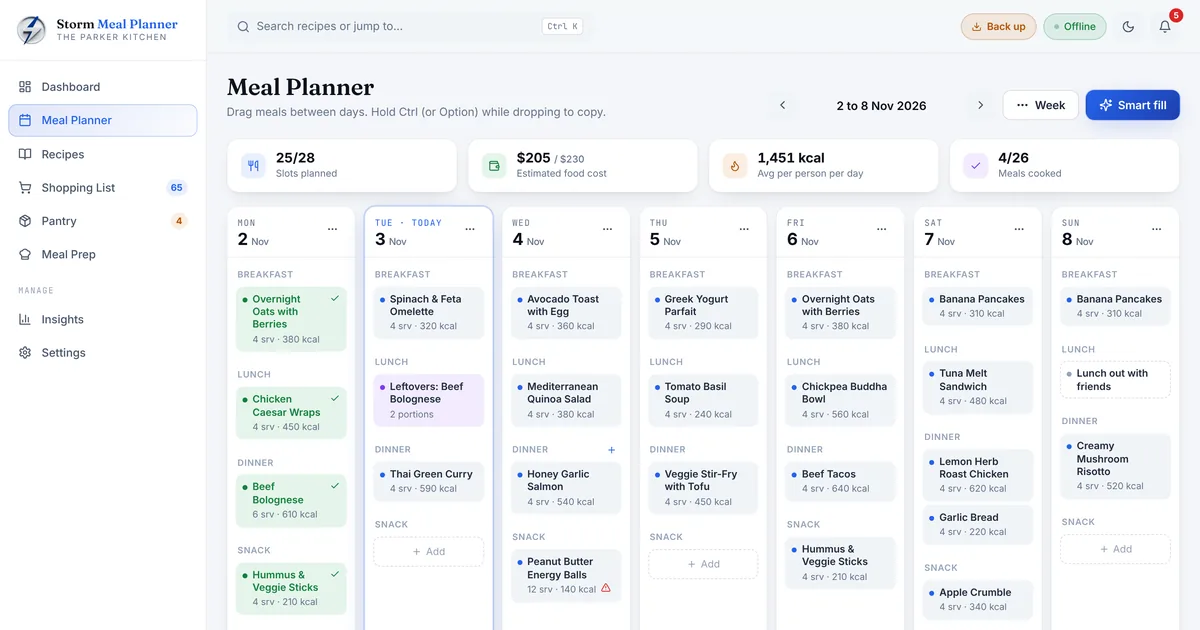
Groceries are one of the few big expenses you can change every single week. Meal planning is the most reliable way to do it. It cuts impulse buys, reduces takeaway nights and means far less food goes in the bin. This guide covers a simple weekly routine that takes about twenty minutes and works for busy families.
Start with what you already have
Before you plan a single meal, look in the fridge, freezer and pantry. Anything close to its best-before date goes into this week's plan first. This one step does more to cut food waste than anything else, and it often means one or two meals cost almost nothing.
Plan around your real week
Look at the calendar before choosing meals. Busy nights need quick meals or leftovers. Quieter evenings can handle something slower. Planning a 90 minute recipe on the night of soccer practice is how plans fall apart and takeaway wins.
- Two or three quick weeknight meals under 30 minutes
- One batch cook that becomes a second meal later in the week
- One leftovers night
- One flexible night for whatever needs using up
Build a library of reliable recipes
Most families rotate through 15 to 25 meals. Write yours down, with ingredients and rough cost per serving. Once you have a library, planning becomes choosing rather than inventing. Note favorites and anything that suits allergies or diets in the house, so the plan works for everyone.
Turn the plan into a shopping list by aisle
A shopping list built from the plan is the heart of the savings. Combine the same ingredient across recipes, subtract what is already in the pantry, and group everything by aisle so you walk the store once. Then stick to the list. If you know what each item usually costs, you can see the total before you leave home.
Cut food waste with a pantry system
Wasted food is wasted money. A simple pantry system stops you buying what you already have and helps you use things before they spoil. Keep a list of what is in the fridge, freezer and pantry, with best-before dates for anything perishable. Put older items at the front. When you plan the week, start with whatever is closest to its date.
Leftovers deserve their own plan. When you cook extra portions, label them with the date and an eat-by date, and schedule them into lunches or a leftovers night. A meal planner that tracks pantry stock and leftovers, and suggests recipes that use up what is about to expire, does most of this automatically.
Cook once, eat twice
Batch cooking saves time and money. Double a bolognese or curry and freeze half, or roast a chicken on Sunday and use the leftovers for wraps on Tuesday. Prep a few things ahead on the weekend: wash and chop vegetables, cook a pot of rice, make overnight oats. Ten minutes on Sunday can save an hour on Wednesday.
Track the budget, not just the plan
Set a weekly grocery budget and record what you actually spend. After a month you will know which meals are best value and where the money really goes. That data makes the next month's plan cheaper without feeling like a sacrifice.
Groceries fit into the bigger picture of your monthly budget. See our guide to budgeting without a subscription.
A sample 20 minute planning routine
Pick the same time each week, for example Sunday afternoon, and follow the same steps. The routine gets faster every week.
- 5 minutes: check the fridge, freezer and pantry and note what needs using
- 5 minutes: look at the week's calendar and mark busy nights
- 5 minutes: choose meals from your recipe library to fit
- 5 minutes: build the shopping list, remove what you have, and set the week's budget
Feeding everyone when diets differ
Allergies and different diets make planning harder but not impossible. Choose a base meal that suits everyone, then add components on the side: a curry with rice for everyone and chicken added separately, or tacos where each person builds their own. Keep a note of each person's allergies and check every recipe against them before it goes on the plan.
Common questions
How much can meal planning save? It varies by household, but cutting even one takeaway meal and a few items of wasted food each week adds up to a significant amount over a year.
Should I plan breakfast and lunch too? Start with dinners. Once that habit sticks, add lunches, especially if you can use dinner leftovers.
What about picky eaters? Include at least one food each person likes in every meal, and let children help choose one meal each week.
Let a meal planner do the busywork
A paper plan works, but a digital meal planner can do the tedious parts for you: build the shopping list automatically, skip what is in the pantry, warn about allergies, track leftovers and expiry dates, and show what the week will cost.
Storm Meal Planner does all of this offline with no subscription. See the meal planner app, $39 once.
Growing some of your own vegetables helps too. Read how to plan a vegetable garden layout.
You may also like: Storm Budget, Storm Garden, Storm Weight