
Why the Scale Bounces: How Trend Weight Shows Real Progress
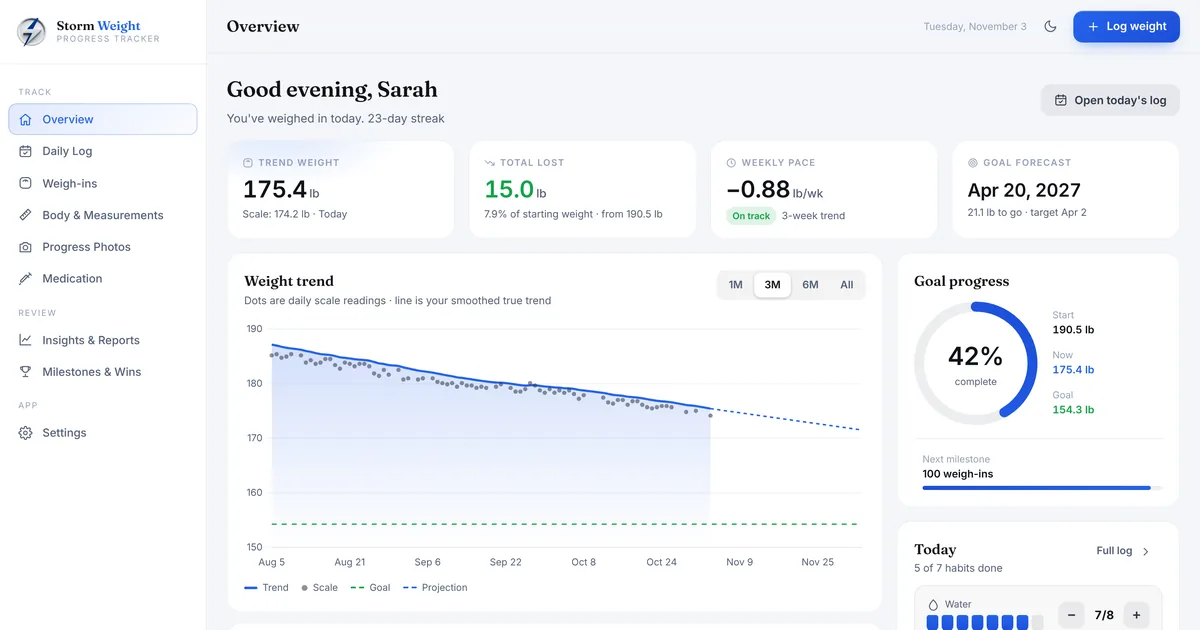
You eat well all week, step on the scale and it is up. It is one of the most discouraging moments in any weight loss effort, and one of the most common reasons people give up. The scale is not lying, but it is noisy. This guide explains why daily weight bounces, how a trend weight line filters out the noise, and how to track progress in a way that keeps you motivated.
Why your weight changes every day
Your body weight can move by a pound or more from one morning to the next without any change in body fat. Water is the main reason. A salty meal, more carbohydrates than usual, a hard workout, a poor night's sleep or hormonal changes can all make your body hold more water for a few days. The food still in your digestive system matters too.
None of that is fat gain. It is noise on top of the real signal.
What trend weight is
Trend weight is a smoothed average of your recent weigh-ins. Each new reading nudges the trend a little rather than moving it all the way. A single high reading after a salty dinner barely moves the line; a steady pattern of lower readings pulls it down. The result is a line that shows the direction you are really heading.
How to weigh in for the cleanest data
Consistency matters more than frequency, but daily weigh-ins give a trend line the most to work with. Weigh yourself at the same time each day, ideally first thing in the morning after using the bathroom and before eating or drinking. Use the same scale on a hard floor. Then record it and move on with your day; one reading on its own is not worth worrying about.
Reading the trend: pace and goal date
Once you have a few weeks of data, the trend tells you your real weekly pace, for example 0.9 lb a week. From your pace and your goal, you can forecast a realistic goal date. If the pace slows, you see it within a week or two and can adjust, rather than finding out after a month of frustration.
Pair the trend with daily habits
The trend tells you where you are heading. Daily habits are what move it. Track a few simple behaviors alongside your weight: water, steps, sleep, protein and a rough calorie total if you count. After a few weeks you can see which habits line up with your best weeks, which is far more useful than guessing.
Keep the list short and achievable. Five habits you hit most days beat twelve you abandon. A habit that ticks itself when you reach your water or step target removes even more friction. Weekly summaries, comparing this week's trend change with the habits you hit, make it easy to see what to repeat.
Track more than weight
Weight is one measure. Waist and hip measurements, progress photos and how your clothes fit often change before the scale does, especially if you are also strength training. Measure every two weeks, take photos in the same light and pose, and keep a short list of non-scale wins like more energy or better sleep.
Starting a home training plan alongside? Read our 30 day home workout challenge guide.
Tracking on GLP-1 medication
If you are using a GLP-1 medication under your doctor's care, logging each dose and injection site alongside your weight can help you and your doctor see how dose changes line up with your trend. Follow your prescriber's guidance on dosing; a tracker is for your records, not a replacement for medical advice.
Keep your data private
Weight, measurements and body photos are personal. Many tracking apps store them on their own servers. If that bothers you, choose an app that keeps everything on your own device, with no account and no cloud upload.
Storm Weight works this way: trend weight, goal forecasts, measurements, photos and an optional GLP-1 log, all offline. See the weight loss tracker, $39 once.
What a plateau really looks like
A true plateau is when your trend line has been flat for several weeks, not when the scale has not moved for a few days. Short stalls are normal, especially after a salty weekend or when starting a new exercise routine that makes muscles hold extra water. If the trend is flat for three to four weeks, review your habits: portion sizes, weekend eating, sleep and daily steps are the usual places to look.
Common questions
Should I weigh myself every day? Daily weigh-ins give the trend the most data, but only if you can treat each reading as a data point rather than a verdict. If daily weighing stresses you, three times a week still works.
How fast should I lose weight? Many health guidelines, such as those from the CDC, suggest about 1 to 2 lb a week for most adults. Your doctor can tell you what is right for you.
Why do I weigh more after exercise? Muscles hold extra water while they repair. The trend usually settles within a week or two.
A note on health
This guide is general information, not medical advice. Speak to a healthcare professional before making significant changes to your diet, exercise or medication.
You may also like: Storm Fitness, Storm Meal Planner, Storm Budget