
Freelance Contract Checklist: 12 Clauses Every Client Agreement Needs
Most freelance disputes are not about bad clients. They are about unclear agreements. A clear contract sets expectations before work starts, protects your time and makes getting paid far easier. This checklist covers twelve clauses that belong in almost every client agreement, plus a way to stop rewriting them from scratch for every new job.
1 to 3: who, what and when
Start with the basics. Name both parties with their legal or business names and contact details. Then describe the scope of work in plain language: what you will deliver, in what format and what is not included. Finally, set the timeline, including key milestones and what happens if the client is late with feedback or materials.
- Parties and contact details
- Scope of work, including what is out of scope
- Timeline, milestones and client responsibilities
4 to 6: money
Spell out the fee, how it is structured and when it is due. A deposit before work starts is common and filters out clients who are not serious. State your payment terms, for example 14 days from invoice, and what happens when payments are late. Clarity here is the single biggest protection you have.
- Fee and structure: fixed price, hourly or retainer
- Deposit and payment schedule
- Payment terms and late payment fees
Pair this with clear invoices. Our guide to invoicing software for small businesses covers what to include.
7 to 8: revisions and changes
Scope creep is the quiet profit killer. Say how many rounds of revisions are included and how extra rounds are charged. Then describe how changes to the scope are handled: in writing, with a revised quote, before the extra work starts.
- Number of revision rounds included
- Change request process and pricing
9 to 10: ownership and confidentiality
Intellectual property is often misunderstood. Many freelancers transfer ownership of the final deliverables only once full payment is received, and keep the right to show the work in a portfolio. Confidentiality protects both sides when you have access to the client's information.
- Intellectual property: who owns what, and when ownership transfers
- Confidentiality and portfolio use
11 to 12: ending well
Every contract should say how either side can end it, how much notice is needed and what is owed for work done up to that point. Finish with a limitation of liability and the governing law, and make sure both parties sign and date the agreement.
- Termination, notice and payment for work completed
- Limitation of liability, governing law and signatures
Templates for different kinds of work
Most freelancers need three to five templates, not one. A website or design project needs detailed scope, revisions and handover terms. A consulting or retainer agreement needs hours, rollover rules and a notice period. A non-disclosure agreement is short and focused on confidentiality. A simple service agreement covers small, one-off jobs.
Build each template from the same clause library so your payment terms, termination and IP wording stay consistent everywhere. When you improve a clause, future contracts benefit without rewriting every template. Keep client details in one place too, so starting a new contract for a returning client takes seconds. Version history means you can always see exactly what was sent to whom.
Stop rewriting the same clauses
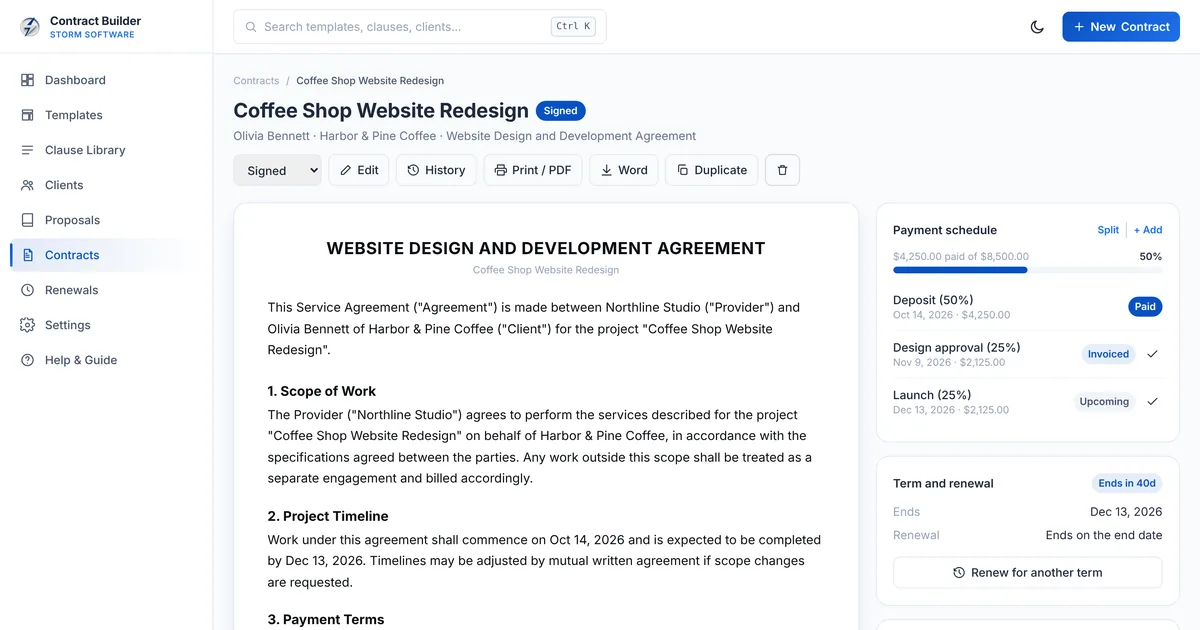
Once you have clauses you trust, you should not be rewriting them for every client. A clause library lets you write payment terms, scope, IP and termination once, then assemble them into templates for different kinds of work, like a website project, a consulting retainer or an NDA. Each new contract becomes a matter of choosing the template, picking the client and filling in the project details.
A tool built for this
Contract builder software can keep your clause library, templates and client records together, flag any placeholder you forgot to fill and export a clean PDF ready to sign. Version history means you can roll back a template without losing your current draft.
Storm Contracts does all of this offline for $49 once. See the contract builder software for details.
Common questions
Do I need a contract for small jobs? A short agreement or a written scope with payment terms is worth having for any paid work. Small jobs cause disputes too.
Is an email agreement enough? An email can be evidence of an agreement, but a signed contract with clear terms is far stronger and avoids arguments about what was meant.
Should I charge a deposit? Many freelancers ask for 30% to 50% upfront on new client projects. It covers your early work and shows the client is committed.
A note on legal advice
This checklist is general information, not legal advice. Contract law differs between countries and states. For high value work or anything unusual, have a lawyer review your templates once; you can then reuse them with confidence.
You may also like: Storm Legal, Storm Builder, Storm Rentals